


I’ve always believed that positioning should come before marketing. Unfortunately, many businesses seem to approach it the other way around.
They develop a product, open their doors, start creating content, and hope that somewhere along the way, an audience will find them.
But positioning is bigger than marketing. It’s the people you hire, the markets you enter, the products you develop, the experience you deliver, the Pantones you choose, and yes, the content you create.
For niche businesses, this becomes particularly important because you’re deliberately not trying to appeal to everyone. Becoming exceptionally relevant to a very specific group of people is the mission.
Marketing communicates your position. Positioning determines why anyone should care.
Niche positioning requires a clear understanding of three things: who you are, what you’re exceptionally good at, and where you stand.
Culture defines who you are. Credibility proves what you can do. Conversation establishes what you stand for.
For the purposes of this essay, let’s call them the Three C’s of Niche Positioning.
01. Culture
Culture is the DNA of your brand. Its beliefs, personality, and values. All expressed through your visual identity, the words you use, and the positions you’re willing to take
You’re giving a specific person a reason to care. Something to identify with or aspire to.
I’ve written about this before. I believe this typically comes in two forms: inspirational or aspirational. Inspiration encourages people to do something. Aspiration makes people want to belong to something.
Neither is necessarily better. But understanding the emotional lever you’re trying to pull should influence how your brand communicates.
I like controversial, but being distinctive doesn’t always require being controversial. A brand can take a strong position on something completely ordinary. Craftsmanship. Simplicity. Hospitality. Tradition. Discipline.
On the other hand, and very much my vibe, there’s absolutely nothing wrong with a brand that challenges convention, provokes debate, or makes certain people uncomfortable.
Regardless of the emotional lever, the strongest niche brands know what they believe and understand whom they serve. And being misunderstood by people outside that subculture can actually be an advantage.
It’s the difference between having an audience and having a following.
An audience pays attention. A following identifies with what you’re building
02. Credibility
Expertise and specificity create credibility.
This is where you earn authority by offering tangible solutions and proving your worth.
I’ve been making this argument for the past couple of years, and I think it’s time we reclaim the term boutique.
Somewhere along the way, boutique became associated with small, expensive, fashionable, or exclusive. But the interpretation I’ve always found more intriguing is specialization.
Offering a specialized solution to a specific problem.
A true boutique business doesn’t need everyone.
You don’t need to know everything. And you don’t need to offer everything.
You need to be exceptional at something.
Identify the specific challenges facing your audience. Offer clear, actionable solutions. Share useful information that helps them make progress.
The more precisely you understand your audience, the more effectively you can demonstrate your value. And the more effectively you demonstrate your value, the less compelling your competitors become.
03. Conversation
Pick a fight or support a cause.
This is where you challenge convention and insert your perspective into larger industry and cultural conversations.
Few businesses exist in a vacuum. There are conversations happening every day within your industry, your community, and the cultures and subcultures surrounding your intended audience.
My favorite technique? Grab a hot button topic, connect it to your expertise, and offer a perspective that’s uniquely yours.
Agree with it. Challenge it. Question it. Just have something meaningful to contribute.
And then there’s another approach. Sometimes you need to poke the bear to start the conversation yourself.
Introduce an idea that perhaps hasn’t been considered. Go head-to-head with an industry standard or assumption. Better yet, say the thing plenty of people might be thinking but aren’t particularly comfortable saying publicly.
That doesn’t mean every niche brand needs to be controversial. Sometimes supporting a cause, celebrating a movement, or reinforcing a shared belief can be just as powerful.
Participating in conversations can expand your reach. Starting them can establish influence.
Either approach creates an opportunity to reinforce your Culture and Credibility.
Less Noise. More Conversation.
The biggest mistake a niche brand can make is trying to communicate like a mass market business. The very characteristics that make a niche brand interesting are often the first things compromised when chasing a larger audience.
Culture gives people something to identify with.
Credibility gives people a reason to believe in your expertise.
Conversation gives people a reason to consider your perspective.
These aren’t categories of content. They’re three dimensions of positioning that should influence virtually every decision your business makes.
Positioning is the strategy. Content is one of its most recognizable expressions.
Which brings me to a little exercise.
Nevermind.
A few years ago, while preparing for a keynote, I dreamed up a fictional niche business to illustrate the power of positioning.
Consider this ...
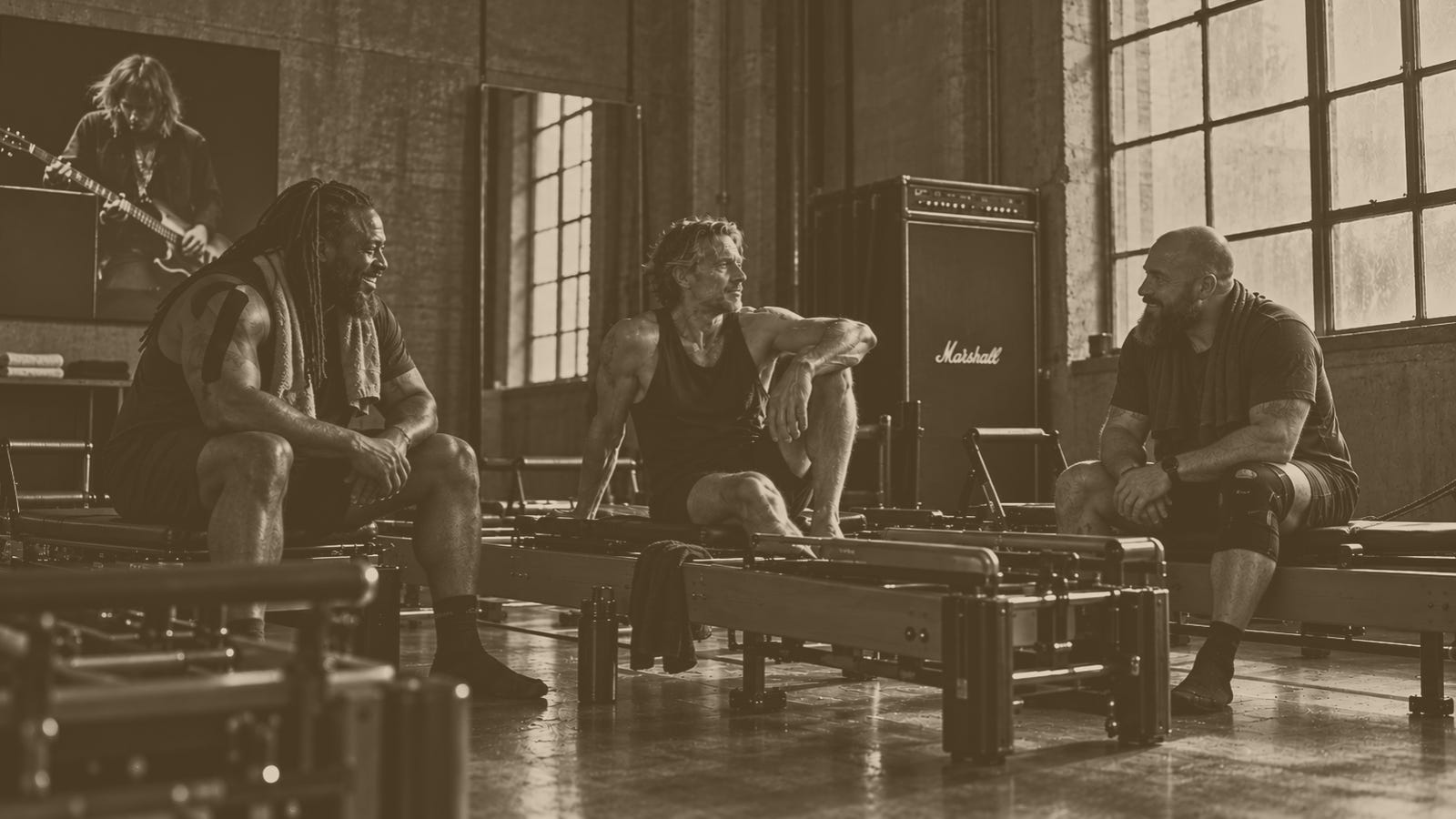
A male-only Pilates studio. The target? Broken down, aging athletes. The soundtrack? Exclusively ‘90s alternative and grunge. The aesthetic? Imagine if SolidCore, Restoration Hardware, and Kurt Cobain had a threesome.
We’d call it N V R M N D.
A nostalgic nod to Nirvana and a celebration of a new subculture.
In the presentation, I stopped there. But if we take the concept further and apply our Three C’s of positioning, it might look something like this.
N V R M N D | Culture
Who belongs here? Better yet, who are we inviting in?
N V R M N D is a male-only Pilates concept for aging athletes in their 40s, 50s, and 60s whose bodies no longer cooperate like they used to.
Gray hair and surgical scars are part of the attire.
These men know they’re no longer 25. But they haven’t abandoned their athletic identity.
It’s not about making Pilates more masculine, harder, or louder. It’s about creating an environment where a particular group of men feels completely at home.
N V R M N D | Credibility
Why this particular variation of Pilates?
N V R M N D isn’t simply a conventional Megaformer studio with different music.
Its programming is developed by physical therapists, athletic trainers, rehabilitation specialists, and Pilates professionals who understand the limitations common to aging male athletes.
The methodology emphasizes consistent movement patterns, with hands-on coaching and individualized modifications to progressively improve each athlete’s range of motion.
30 movements. 1 sequence. 3x per week.
Everything is designed around a specific problem: helping aging men with athletic backgrounds maintain and reclaim the movement capacity they need to stay active.
N V R M N D | Conversation
Why is this worth considering?
N V R M N D isn’t arguing that Pilates is for women or that traditional Pilates doesn’t work for men.
But it does challenge how Pilates is currently packaged and marketed. It also pokes fun at an overused phrase circulating through the fitness industry: “Women are not just small men.”
Because the reverse is equally worth considering.
Men are not just big women.
Consider a 250-pound former offensive lineman with two ACL reconstructions under his belt, holding a single-leg lunge for two minutes. Katy Perry is blasting in the background while a 22-year-old, 105-pound influencer tries to influence him.
Probably not his ideal environment for reclaiming range of motion.
Pokes aside (pun intended), men and women alike deserve products and experiences designed with their specific needs in mind. And honestly, why should a proven training method always be packaged for the same audience in the same way?
Different target. Different protocol. Different music. Different environment. Different personality.
The concept reimagines the Pilates experience, creating a new subculture within an established fitness category.
It’s not reinventing Pilates. It’s reconsidering who might feel compelled to participate.
With positioning this deliberate, the marketing practically writes itself.
The creative execution? That’s a conversation for another day.
For now, consider applying this lens to your own business.
Is your brand’s DNA unmistakable? Are its beliefs, personality, and values recognizable? Does it demonstrate expertise? Does it contribute something meaningful to the conversations surrounding your industry?
More importantly, does it reflect the same identity, expertise, and perspective that people experience when they actually interact with your business?
Because positioning isn’t something you invent for your Instagram feed.
It’s something you build into every aspect of your business.
Your content shouldn’t determine your positioning.
Your positioning should determine your content.
Brandon Cullen
In search of life’s [im]perfect soundtrack ...
Do you have a framework you’d take a client through to work on the positioning? I’d love to walk through that exercise. And why has NVRMND never been used. That’s a killer concept!!