


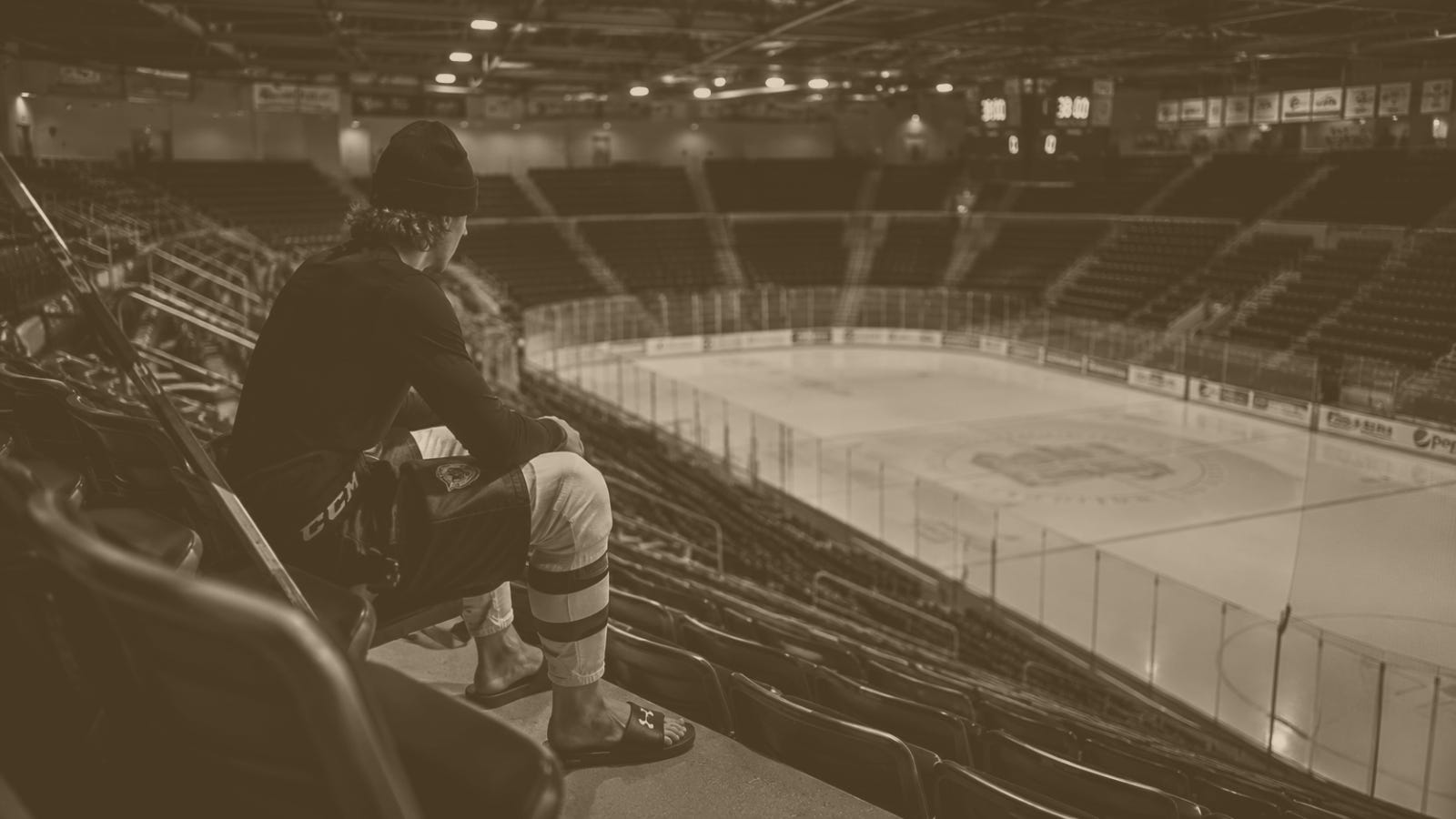
It was the middle of the 2001/2002 season. I was playing for the Erie Otters in the Ontario Hockey League, grinding through what would eventually become a championship season.
I was 20 years old. Little did I know, I was about to receive some of the best career advice of my life. It just happened to come wrapped in nicotine and profanity.
Unexpectedly, our captain, Brad Boyes, a future NHLer and league MVP, had come down with mononucleosis. We were heading into the most important stretch of the season without our star player.
My coach, Dave McQueen, named me interim captain. The decision made sense. I was currently the team’s assistant captain and had captained my previous team. In fact, Erie had traded for me largely because of my leadership qualities and my willingness to do the ugly work required to build a championship team.
My role was the unmeasurables: grit and accountability. I played hard. I played physical. And I protected teammates. I’d like to believe most who saw me play would describe me as the type of player you loved having on your team and hated lining up against.
McQueen sat me down and explained the assignment.
“Boyes is down. We need you to step up and lead.”
Simple enough.
The interim captaincy came with more responsibility, but it also came with more ice time. And that is where my unintentional detour began to take shape.
Within a few games, I started putting up better numbers on the scoresheet, and the team kept winning. From an outsider’s perspective, everything looked great on paper.
The problem was my game started to take on a new shade. To handle the extra minutes, I unknowingly started conserving energy. I became less physical and avoided unnecessary traffic and collisions.
I drifted away from the chaos that built my reputation as a player and found a comfortable new home on the perimeter of the ice surface.
To be honest, it was subtle, and my newfound success on the scoresheet created a blind spot. But the reality was that I was abandoning the very thing that made me valuable. The exact characteristics that led Erie to acquire me.
A couple of weeks into this new role, my assistant coach, Peter Sidorkiewicz, poked his head into the locker room.
“Cully. Coach wants to see you upstairs.”
Never good.
The coaches’ lounge looked different in the early 2000s. The atmosphere was equal parts cigar smoke, Canadian whiskey, and ruthless feedback.
On this day, there was a single foldout chair in the middle of the room. McQueen and Sid sat across from me. The two carried on with small talk as if I wasn’t even there.
Then it shifted to the team’s success, along with mentions of my improved numbers.
Then there was a noticeable pause. McQueen looked at me and said:
“Cully, you’ve found a nice little home on the perimeter.”
I cautiously laughed, but deep down I knew where this was headed.
“Maybe I’ve been doing it wrong all these years. Wasting all this energy trying to run people over,” I joked.
No reaction. No smile. Just deafening silence.
Then he took a pull from his cigar and said:
“Cully, you’re not that fucking good.”
More awkward silence.
“We brought you here for a specific reason. Your job is to make the game easier for your teammates by making the ice a miserable place for our opponents. Get back to doing what you do best.”
McQueen then took a second drag before he hit me with the finisher.
“And if you happen to prefer being on the perimeter, we will be happy to put you in the stands. That’ll give you a real nice fucking view of the ice from the outside.”
Harsh? Maybe. Accurate? Absolutely.
McQueen was my kind of coach, and he understood something I would spend years relearning in business. This lesson had nothing to do with hockey. It was about understanding your value.
Teams do not win because everyone does everything. Teams win because everyone knows their role and executes it exceptionally well.
Too often in today’s culture, we celebrate balance. We celebrate being well rounded. We even encourage people to try on a little bit of everything, just to see what fits.
I understand the human side of that, and in the right circumstances, there is value in it. My only caution is applying that same thinking to business.
Years ago, I came across a quote from filmmaker and photographer Clayton Cubitt:
“Find the thing inside you that is different, that is sharp as a diamond and jagged as a razor. Hone that, because that’s the thing with which you will cut the world.”
In other words, find the thing that creates disproportionate value. The thing that makes you, you. Find it, sharpen it, and leverage the fuck out of it.
The older I get, the more I appreciate what McQueen was trying to show me. Stay in your lane. Own your role. And exhaust your gift.
The last thing any organization needs is another perimeter player.
Brandon Cullen
In search of life’s [im]perfect soundtrack ...