


I’m all for capitalism, but even capitalism needs guardrails.
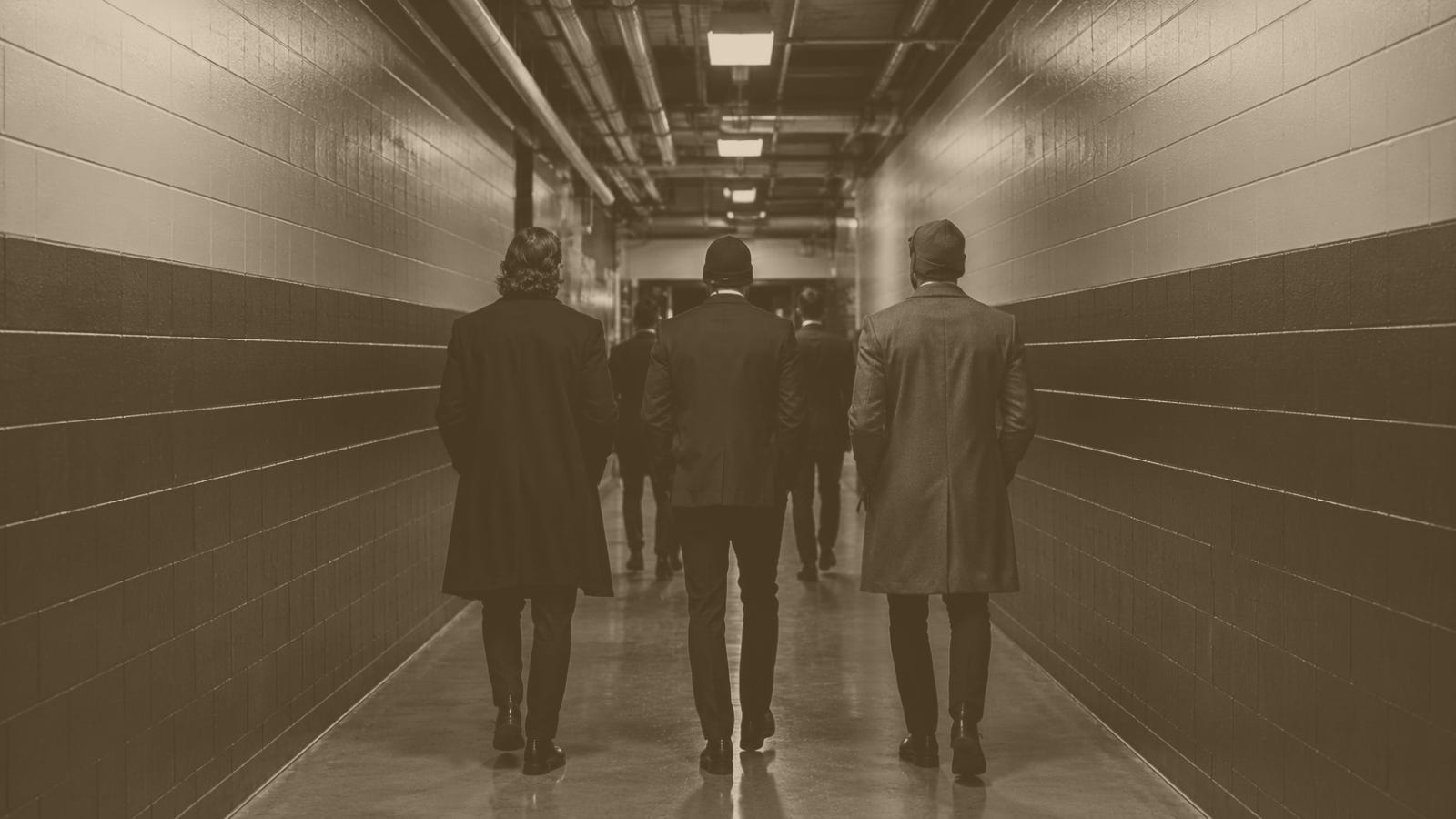
Prior to the 2025-26 season, the NHL officially relaxed its mandatory dress code. Players would no longer be required to wear suits and ties to the arena. Instead, they simply had to dress in a manner “consistent with contemporary fashion norms.”
Contemporary fashion norms?
What the fuck does that even mean?
But that’s not really the question.
What happens when organizations abandon the very constraints that once made them distinctive?
Out of the four major North American professional sports leagues, the NFL, MLB, NBA, and NHL, hockey has always represented something different. Not because it lacked superstars. Not because it lacked personalities. Because it asked those personalities to become part of something bigger than themselves.
The crest always came before the name.
The team always came before the individual.
I still remember the distinct smell of walking into the rink. It’s hard to explain how musty and crisp can complement one another so perfectly. The dampness in the air. Years of sweat embedded in the concrete. The beautiful sound of freshly sharpened skate blades carving into the ice as background music.
It was all unmistakable.
But more than anything, I remember the feeling of walking through those arena doors wearing a suit and tie. The dress code wasn’t an inconvenience. It was an occasion. Competition was the event, but the suit was a quiet reminder that being a professional started long before the opening face-off.
Looking back, I realize it had very little to do with the suit itself. It was wrapped in privilege. It represented respect. And somewhere between lacing up my boots and lacing up my skates, it gave me a profound sense of belonging.
In every team sport, there are two kinds of players.
The individual.
And the teammate.
The individual treats the game like a personal brand campaign. They may wear the same jersey, but their motivations are different. They value recognition as much as results and celebrate personal milestones, even in defeat.
The teammate understands that personal success only matters when it elevates the group. Their identity becomes part of the connective tissue that holds a team together. They sacrifice statistics for chemistry and ego for championships.
In hockey, that philosophy wasn’t reserved for the ice. It was the standard. It was the expectation. And sometimes, it was as simple as twenty suits walking into an arena together.
Even the tightest of teams still need a leader.
Few athletes embody that philosophy better than Connor McDavid. The best player in hockey, and arguably the best player the game has ever seen, chose to sign well below market value to give the Edmonton Oilers greater flexibility to build a championship roster.
And not once.
Twice.
First in 2017.
Then again in 2025.
By most estimates, those decisions may have cost him between $40 million and $50 million over the course of his career.
Why?
He plays for the crest on the front of the jersey, not the name on the back.
Show me another superstar in the NFL, MLB, or NBA willing to leave that much money on the table for the good of the team.
A different sport. The same lesson.
I felt something similar when the New York Yankees loosened their longstanding facial hair policy. I’m not even a fan of Major League Baseball, but traditions matter. Organizations become iconic because they preserve the very things that set them apart.
Up until that point, as someone who rarely followed baseball, here’s how I saw it.
There are Major League Baseball players.
Then there are the New York Fucking Yankees.
I understood the business case. I just wasn’t convinced it was worth the cultural cost.
Ironically, the 2026 Stanley Cup Champion Carolina Hurricanes reminded us why. Throughout their championship run, the team became almost as recognizable for their coordinated suits as they were for their suffocating, team first brand of hockey, once the puck dropped.
Neither was flashy or performative. It was never really about the suits. It was about the culture they represented.
It was a reminder that the best teams still understand something many organizations are slowly forgetting.
Culture doesn’t begin when the game starts.
It begins the moment people choose to put the institution before themselves.
I’m not suggesting every player should look the same. Individuality has its place. Style has its place. And shit, capitalism certainly has its place.
But as I said initially, even capitalism needs guardrails.
The NHL didn’t remove the dress code by accident. It made a calculated business decision, and it may ultimately prove to be the right one. But business decisions often come with cultural consequences.
Maybe the suits never produced a championship.
Maybe they simply represented the culture that did.
I often use professional sports tunnel walks as quiet teaching moments with my sons. Not because I cared whether someone wore a suit, but because I cared what the suit represented.
Respect for the game.
Respect for your teammates.
My sons have heard that speech more times than they probably care to admit, but those moments made it easy to explain the difference between being a great athlete and being a great teammate.
Looking back, I realize I was never really teaching them about hockey.
I was teaching them what it means to become part of something bigger than themselves.
I used to think the suit was part of the uniform.
I now realize it was part of the culture.
And while I’ll always miss lacing up my skates beside my teammates, I’ll miss lacing up my boots and tying my tie just as much.
Brandon Cullen
In search of life’s [im]perfect soundtrack ...
Great article bud!! Totally agree! It all has bled into society. We have accomodated the lowest common denominator and it has lowered societies standards.